The village · Brody area
About Razhniv
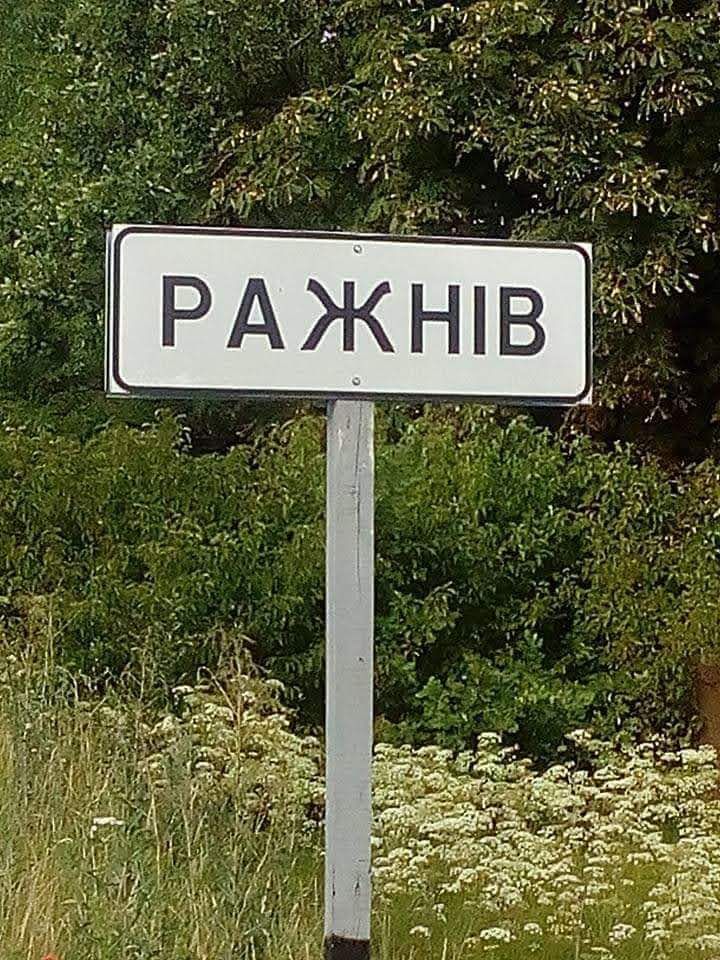
Razhniv (Rażniów, Ражнів) is the village in the Brody area of Galicia where the Dubas families on this site lived. This page is a short orientation for family — where the village sits, how it looked in the old descriptions, and what remains of its church — not a complete history.
The village and the area
Razhniv lies in the valley of the River Styr, southwest of Brody, in what is now Zabolottsi hromada, Zolochiv raion, Lviv oblast. The 1888 Słownik geograficzny places it 16 kilometres from Brody and 5 kilometres from the post office at Zabłotce; later descriptions usually say about 18 kilometres from Brody and 6 kilometres from the railway station at Zabolottsi. In that gazetteer the neighbours are Ruda to the north, Ponikowica Mała to the east, Zabłotce to the southeast, Czechy to the south, and Turze to the west.
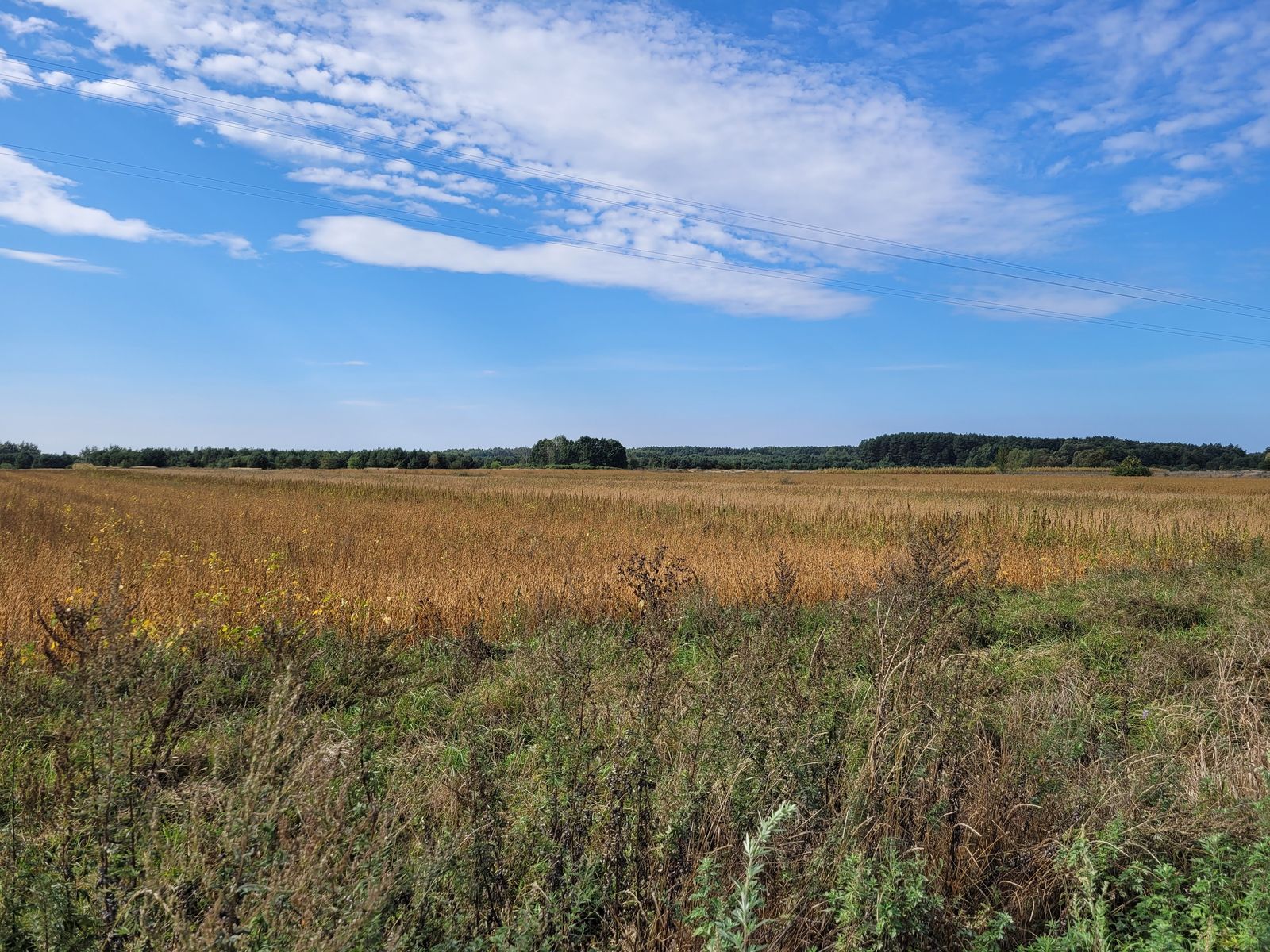
The same account describes the land with unusual care. Three arms of the Styr run through the village territory. The middle arm, called Łahodów, widens into a long pond, and the houses stood in that middle valley. Clusters of houses had their own names — Babin, Kiecki, Lipnik (Łypnyk), Mandycze in Lisok, Srakuła, and Wełyn — and there were two taverns, a distillery, and two water mills.
A short history
Ukrainian Wikipedia gives a traditional first mention of 1099, without a source, and a founding date of 1594 in its fact box. Those two dates do not agree, and we have not seen a cited document for either. What can be said more firmly is that the village appears in the Josephine (1785–1788) and Franciscan (1819–1820) land cadastres of Galicia, and that the Greek-Catholic registers indexed on this site begin in 1784.
The 1888 gazetteer also records that Babin, now part of the village, was once a settlement of its own, named in a document of 1629 and, according to a mid-nineteenth-century account cited there, destroyed in a Tatar raid in the middle of the seventeenth century.
In 1880 Razhniv had 90 houses and 576 people in the commune, plus 13 houses and 93 people on the manor: 669 in all. Of these, 557 were Greek Catholic, 40 Roman Catholic, and 72 Jewish. Władysław Gniewosz held the larger estate here and in neighbouring Łabacz. Wikipedia names Feliks Gniewosz as the owner at the beginning of the twentieth century. A branch school with Ruthenian as the language of instruction had been open since 1865; in the interwar years an elementary school in the village was headed by Maria Solanowska.
In 1934 the village was joined, with several neighbours, to the collective commune of Stanisławczyk. The twentieth century brought war, occupation, and a sharp fall in population. By the census of 2001 Razhniv had 350 inhabitants, 349 of whom named Ukrainian as their mother tongue. In 2015 it became part of the Zabolottsi hromada, and in 2020, after the Brody district was dissolved, it was placed in Zolochiv raion.
Village life, and our families
The registers on this site are the best window we have on ordinary life in the village: births, marriages, and deaths, the houses people lived in, and the neighbours who stood as godparents and witnesses. In the public name index, Dubas is the surname mentioned most often, with Lesiuk close behind. The documented public line on this site runs through house 39 and ends, for these pages, with Philip (Pylyp) Dubas, born in 1877, who later emigrated. Living descendants are not listed.
A notable villager — not claimed here as a member of that direct line — was Pavlo Dubas (1894–1972). He served as a lieutenant in the Ukrainian Galician Army during the independence struggle of 1917–1921, later emigrated to the United States, helped to found the Ukrainian Riflemen Community there, and wrote about the history of his native Brody region.
The church
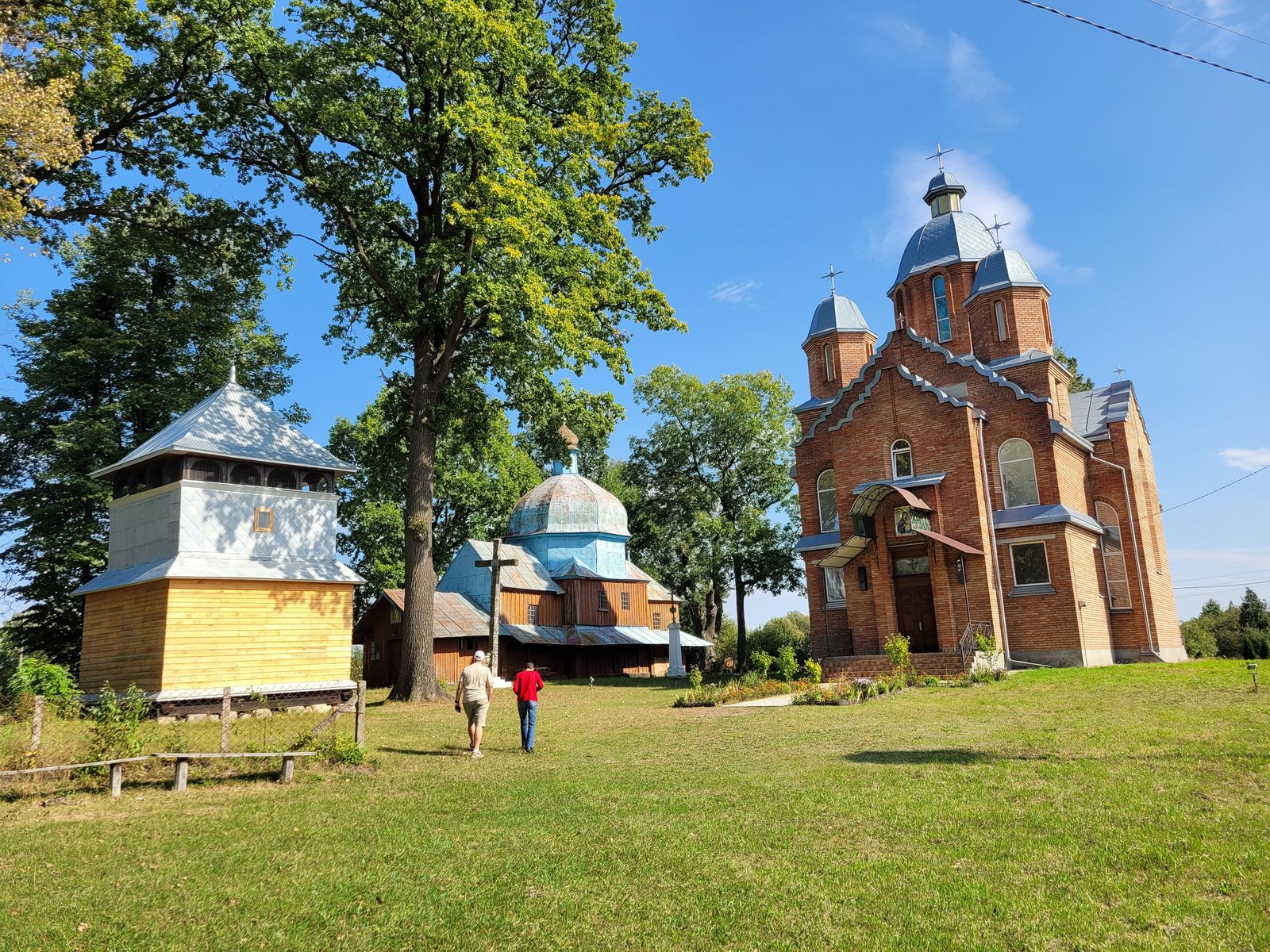
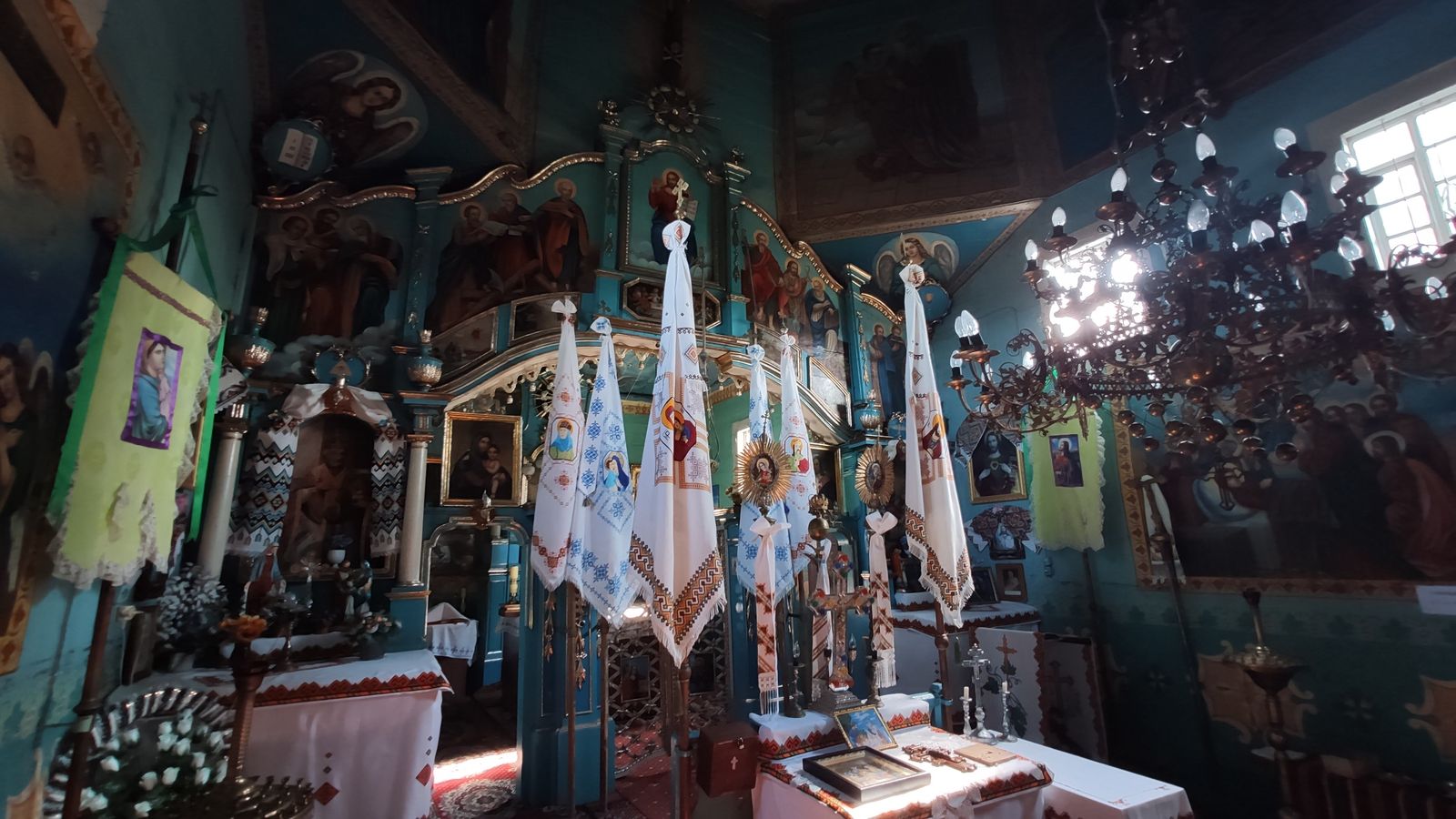
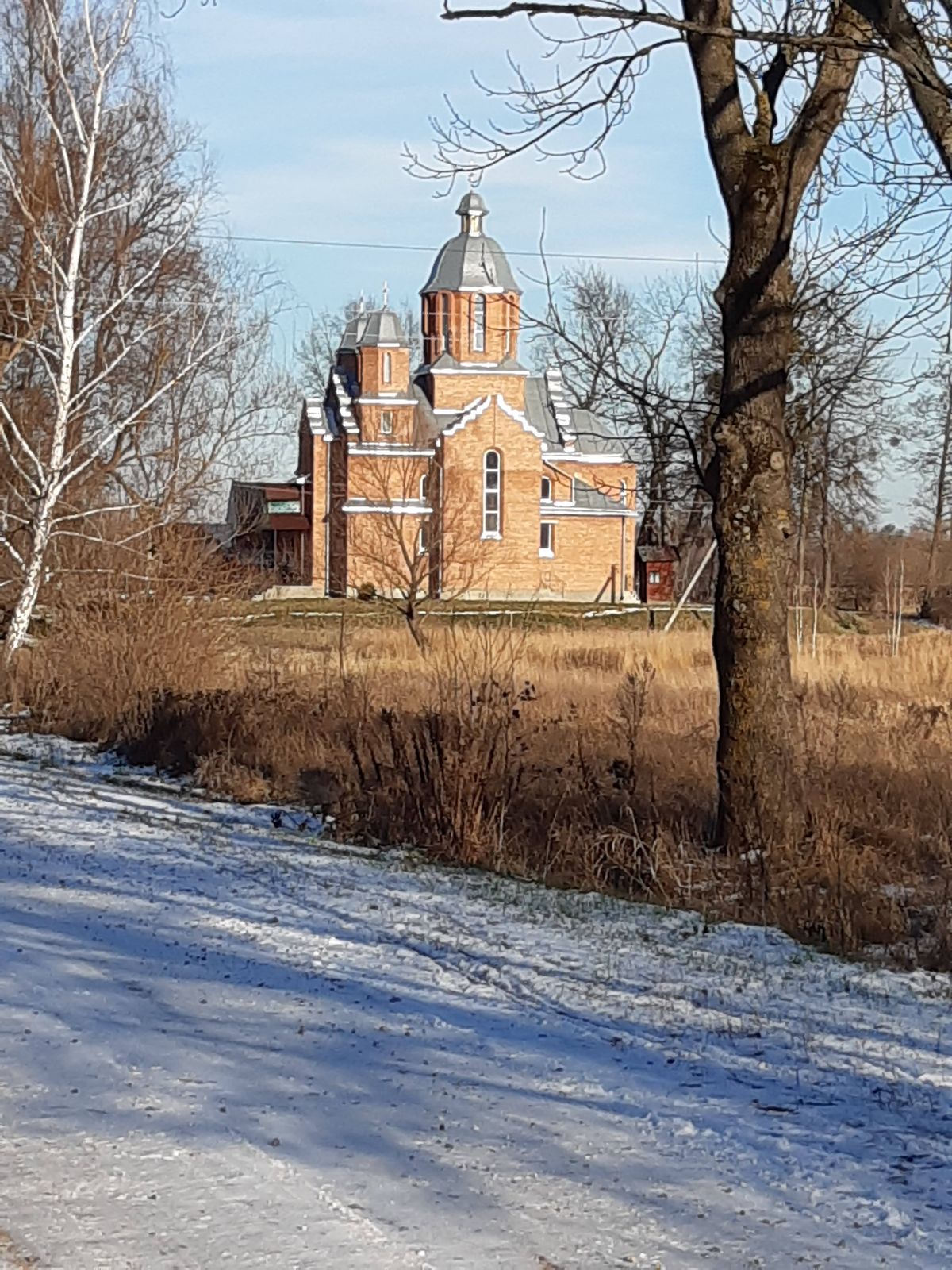
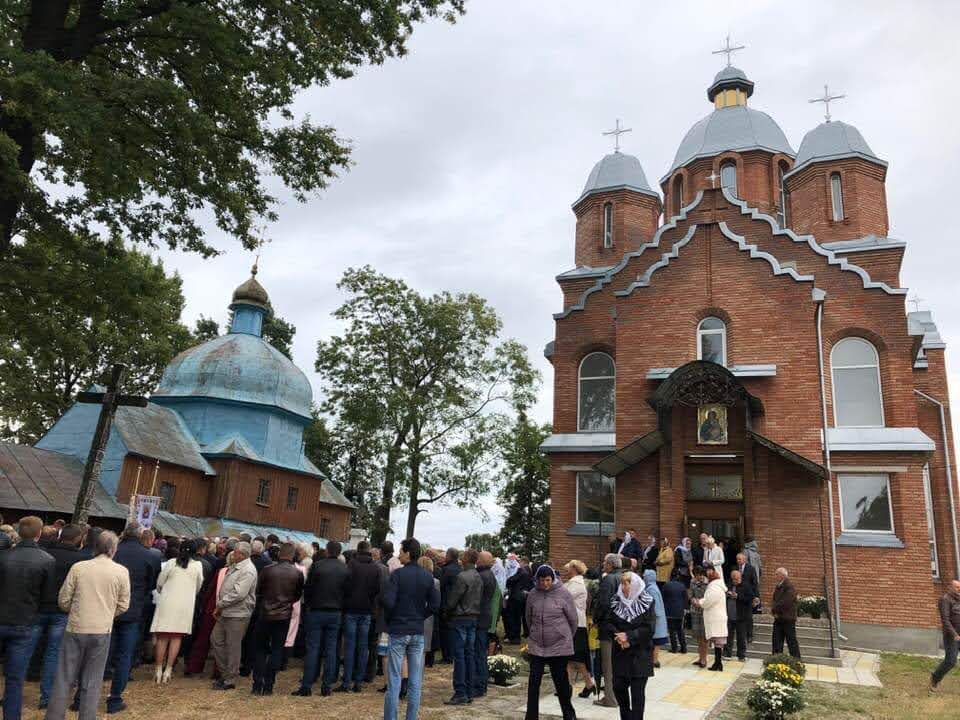
Beside a newer church stands the wooden church of the Nativity of the Most Holy Mother of God, built in 1846 and still in the village. It was painted by the artist Matvii Sirko. To the northwest is a wooden two-tier bell tower with a tent roof. In 1947 the parish priest, Fr. Vasyl Lesiuk, was arrested; after that, only priests of the Russian Orthodox Church served there. In the early 1980s the church was closed, and the building later housed the archive of the “Razhniv” hop-growing state farm. It is once again used by the village’s Ukrainian Greek Catholic community. Local Roman Catholics belong to the parish of the Exaltation of the Holy Cross in Brody.
Photographs
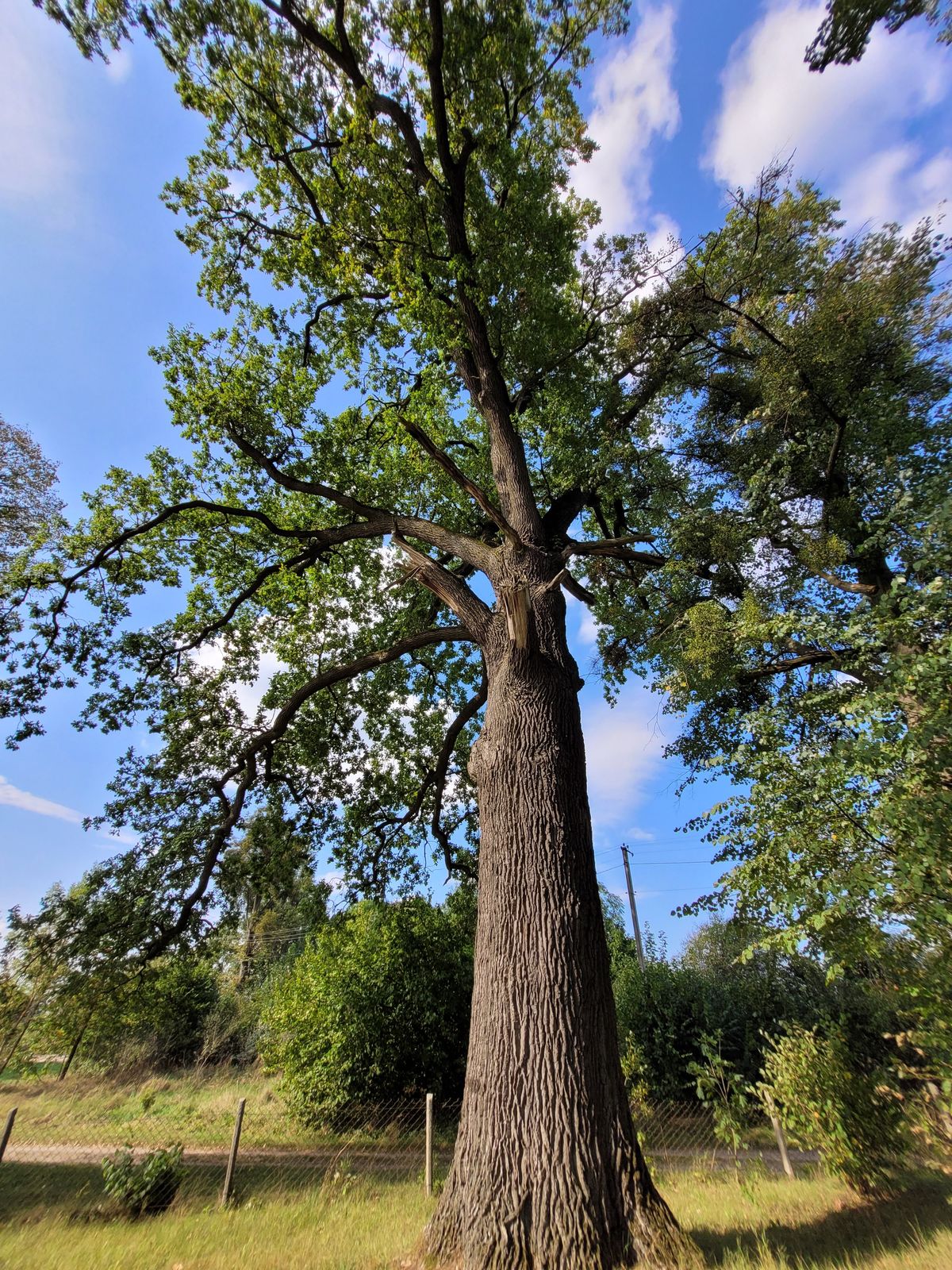
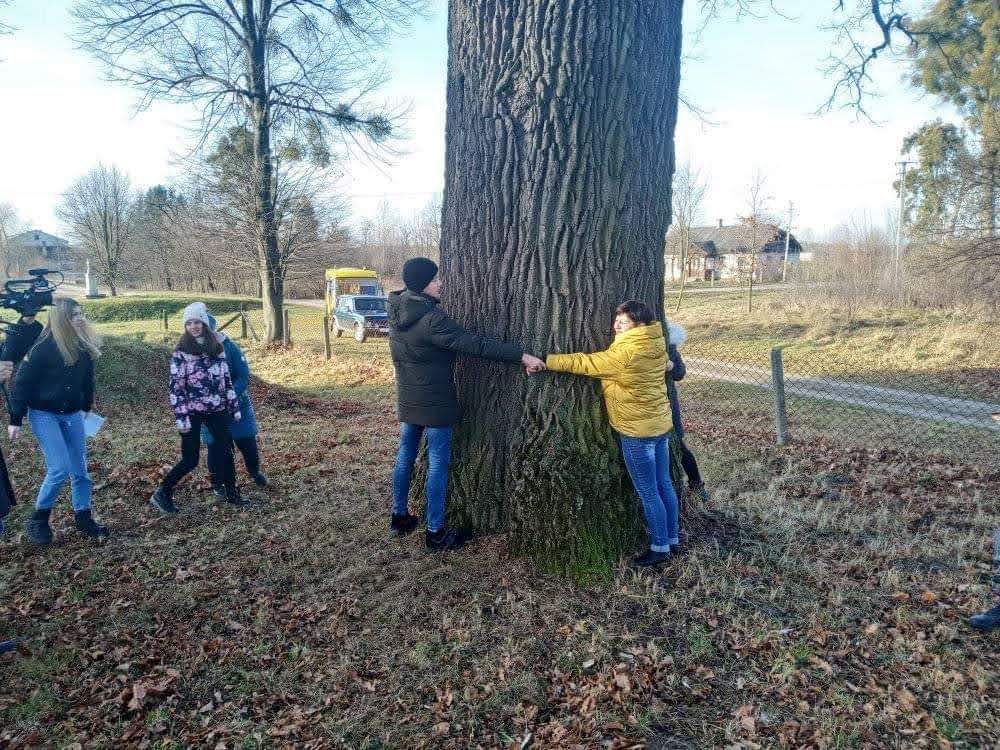
Photographs from the village.
On this site
To go further, these pages on this site stay with the registers and the family:
Rażniów in the Registers, 1784–2014
Who lived there, who sponsored whose children, which houses held which families, and where the Dubas line sat in that web.
Read the report → For researchersName index
Searchable person-mentions from the Greek-Catholic registers and village books. Filter by surname and village.
Open the index → Direct lineDubas line from Rażniów
The documented paternal line, deceased only, from Semen to Philip (Pylyp), born 1877.
View the line →Sources
- “Ражнів.” Українська Вікіпедія. The article gives 1099 as a first mention, without a source, and 1594 as a founding date in the fact box.
- Ludwik Dziedzicki. “Rażniów.” Słownik geograficzny Królestwa Polskiego i innych krajów słowiańskich, vol. IX. Warsaw, 1888, pp. 573–574.
- Історія міст і сіл Української РСР. Львівська область. Kyiv: Holovna redaktsiia URE AN URSR, 1968, p. 167. Cited here as a standard reference; the page itself was not in hand when this preview was written, and no statement above rests on it alone.
- “Rażniów in the Registers, 1784–2014,” and the name index and Dubas line pages on this site.